
stranger than fiction
notes on Strangers from a fellow divorcée

A couple of weeks ago, I received a notification from my library that my latest reservation was ready to collect. I opened the email, deciding I’d most likely cancel the request: I had just moved, and the thought of schlepping back across to my old neighbourhood just to return it in a couple of weeks felt like one task too many. The book, though, was one I’d been waiting for, one with a long waitlist, one that had been mentioned in just about every corner of the internet I frequent. I stopped by the library on my last errand run in that part of town, and brought the book home with me. A few days later, I attended virtual court, a hearing pertaining to my divorce. The next morning, much sooner than I had expected, I received an email telling me that my divorce was now final. Then, I reached for Strangers.
Strangers, for those of you who haven’t come across it yet, is the story of the end of memoirist Belle Burden’s marriage. Burden published an essay about her experience of being left by her husband in the New York Times column Modern Love, before expanding the piece into a book-length project that was published to incredible buzz earlier this year. The Modern Love column can be read online here, but to summarise: Burden’s marriage broke down in the second week of lockdown in 2020, when she received a voicemail from a stranger telling her that his wife was having an affair with her husband. Though her husband initially reassured her that it meant nothing, that he loved her, the next morning he had packed a bag. He told her he wanted a divorce, that she could keep their properties, retain custody of their children. I don’t want it anymore, he told her. I don’t want any of it.
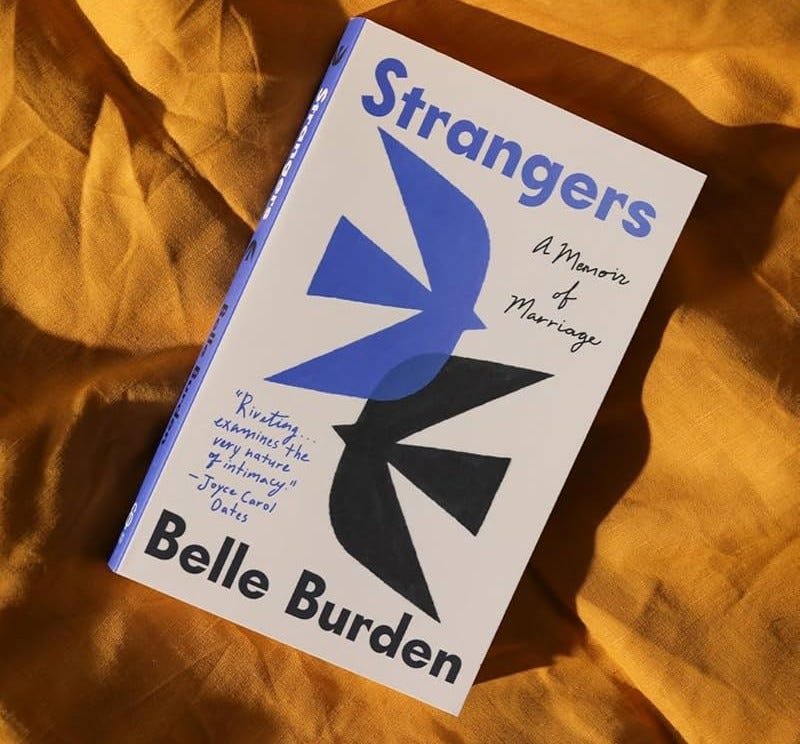
Burden and her husband, it’s worth noting, live a life of intense privilege. I am certain that a huge amount of the interest in their story, aside from the shocking nature of the way their relationship ended, is due to their way of living, the casual way that she refers to their house in Martha’s Vineyard, their social lives at an exclusive tennis club, the vast sums of money that most of us, myself included, can’t even begin to imagine sitting in their bank accounts. That being said, though, I relate to a huge part of her story.
Burden describes with searing honesty the way that the departure of her husband rocked her, shattered her understanding of the world they had built together. In a single day, she says, he had become a complete stranger to her. I know from experience how this can feel, the whiplash that it can cause. She explains the nauseating realisation that the financial decisions you made when you were happy and in love and naive to the realities of the division of marital assets will come back to haunt you. She describes attending a virtual courtroom, the unexpected mundanity of it, like any other meeting you have to clock in for before the working day is over. She tells her readers that her husband, the man she slept beside for twenty years, is somebody she doesn’t know anymore. All of this felt so viscerally true to me that despite our very different experiences of the world, she had got something fundamental about my life down on paper that I am not sure anybody else had before.
One moment in particular in the memoir stood out to me, seems to have stood out to everyone. Whilst telling their kids of their separation, Burden’s ex-husband proclaimed that he was starving, and he asked her to make him a sandwich. The fact that he asked this, the fact that she actually did it: it’s almost unbelievable, truly stranger than fiction. But is it so strange? When I think back to the day I had my world turned upside down, when I left in the morning to walk my dog and returned to find my marriage was over, I experienced my own version of Burden’s sandwich. It’s so outlandish, it doesn’t sound true. And yet.
After I finished the book, I listened to a couple of podcast interviews with Burden. In one, the host asks her whether anything seemed off, before the day that their marriage came to an end. It strikes me as the sort of thing she must be asked all the time, the sort of thing I am asked, too, when I share my own experience with somebody for the first time. Didn’t you see it coming, on some level? Were you happy, though? Really?
It feels like people are reassuring themselves, looking for proof that this won’t happen to them, can’t happen to them. They wouldn’t have been so clueless, you see. They would have seen it coming. Well, hindsight, like the year the memoir is set, is twenty twenty. And, as they say, love is blind.
In her memoir, Burden explains how she had a long-dormant interest in creative writing, stifled long ago by a peer in a college class who branded her untalented. In the breakdown of her marriage, she found a catharsis in returning to writing, in putting the things she’d experienced down on paper. In a podcast interview with the Modern Love team, she explains that she wrote the truth of her experience down as a means to survive it.
This, too, I relate to. Though I’d been writing for a while at the time of my own separation, my focus on fiction melted away. I was unable to concentrate on the world I had been working so hard on building when my own reality had crumbled before me. Creative non fiction, essay writing - this became my output. Writing about my experience felt inevitable. If it didn’t come out on the page, where would it go?
Like Belle, I wrote an essay about my experience and submitted it to the Modern Love column, though this was long before I’d even heard of Strangers. The NYT website promises a response within 3-4 months: my rejection took 7. Of course, the breakdown of my marriage isn’t shiny or high-profile: neither me nor my ex are descended from the Vanderbilts, we don’t have a key to a private beach on Martha’s Vineyard, nobody works at a hedge fund. It was a same-sex relationship, which I suppose makes it distinct from so many of the stories that have come before ours, but our queerness didn’t manage to protect us from the same clichés that seem to end so many heterosexual marriages.
I also couldn’t bring myself to write in such a candid way about the minutiae of my divorce. Burden writes an unflinching, chronological account of her marriage and separation, whereas my own writing on the same topic remains focused on me, my experience, shies away from the she-said, she-said of what happened. I think that my approach works, still cuts to the quick of the hurt I felt during that time even without the specifics of what exactly transpired. Modern Love may not have accepted the piece, but I will publish it here next week all the same.
At the end of an interview on the NPR podcast, Burden states that despite everything, despite what she went through being a worst-case-scenario for her: she’s happy it happened. This, too, I relate to. I wouldn’t wish it on my worst enemy, and yet I am grateful every single day. Yes, it’s terrifying that your partner can turn into a stranger before your very eyes. But if we want to keep growing, keep changing, keep learning, then over time, we will become strangers, too. And isn’t it exciting, when you meet somebody new?
Thank you so much for subscribing to The London Desk - it means so much to me to have people reading my work. If you liked this post, I would really appreciate it if you would 💓 it, restack it or forward it to a friend. I’m trying to grow this newsletter, and I would be very grateful if you passed it along to someone who might enjoy it. Thank you!
Always, the best writing. Love you